


Recently, Shixian Lin’s lab from the Life Sciences Institute, Zhejiang University, published an invited review article in Trends in Biochemical Sciences entitled “Genetic Encoding of Multiple Distinct Noncanonical Amino Acids”. This paper comprehensively and systematically summarizes the breakthrough progress in the genetic encoding of multiple distinct noncanonical amino acids (ncAAs), highlighting the development of mutually orthogonal translation systems and the expansion of recoded codon repertoires.
The site-specific incorporation of ncAAs has revolutionized protein research. Genetic code expansion (GCE) technology has revolutionized protein research by enabling the site-specific incorporation of ncAAs bearing novel chemical functionalities. Inspired by natural mechanisms that expand the chemical space of proteins, GCE relies on engineered orthogonal translation systems (OTSs) and blank codons to decode ncAAs independently of the host machinery. To date, this technology has facilitated the incorporation of over 300 ncAAs, driving significant breakthroughs in deciphering protein functions and designing precisely modified therapeutics and biomaterials.
However, synthesizing multifunctional biopolymers demands moving beyond single-type ncAA incorporation to simultaneously encoding multiple distinct ncAAs. This review summarizes transformative progress in the genetic encoding of multiple distinct ncAAs, including the development of mutually orthogonal translation systems and the expansion of codon repertoires (Figure 1). We highlight recent breakthroughs that have achieved the incorporation of multiple distinct ncAAs. Notably, integrating rare codon recoding with stop codon suppression in mammalian systems has recently enabled the genetic encoding of five distinct ncAAs. These innovations establish a robust platform for advanced biosensors, next-generation therapeutics, and synthetic biology with expanded chemical repertoires.
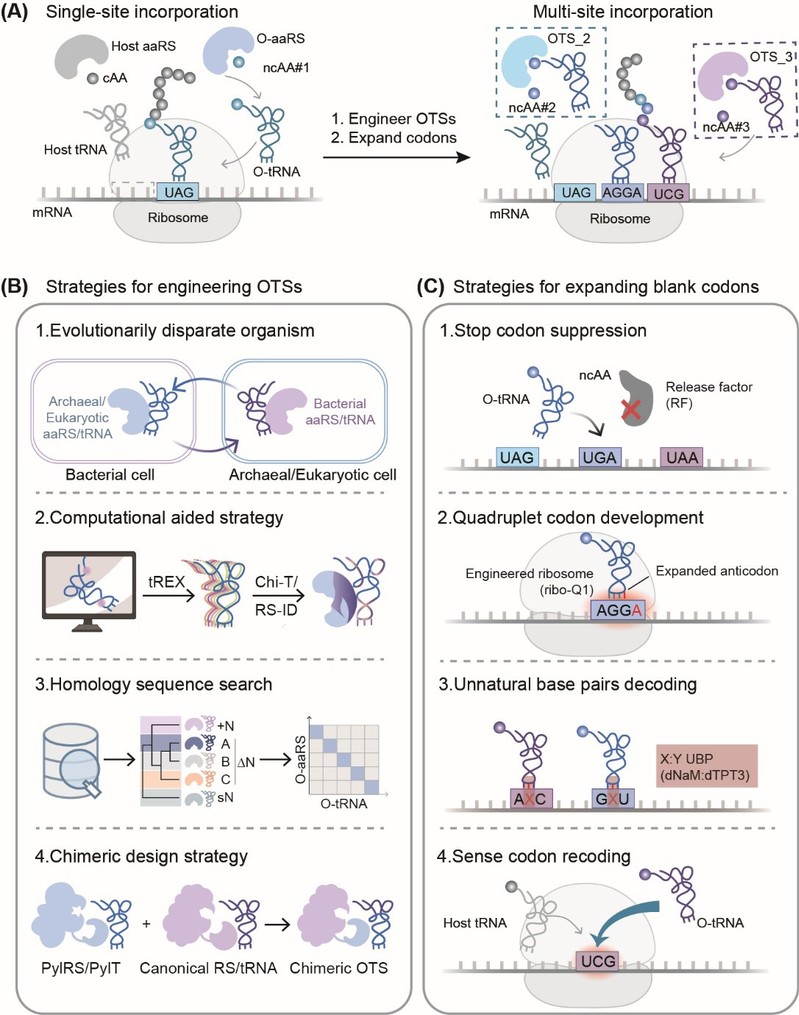
Figure 1. Strategies for expanding the genetic code to incorporate multi-ncAA
Dr. Wei Yu and Yu Fang are the co-first authors, Dr. Shixian Lin and Dr. Wenlong Ding are the corresponding authors in this study. This research was supported by the Ministry of Science and Technology of China, the Fundamental Research Funds for the Central Universities, the Scientific Research Innovation Capability Support Project for Young Faculty and the National Natural Science Foundation of China

